Friday, 30 October 2015

Wednesday, 14 October 2015
Todorov's narrative theory, Propp's character theory and mise en scene in music videos
Todorov's narrative theory is a structure put forward by Tzvetan Todorov that supposedly every narrative follows. It begins with a state of equilibrium, which is then disrupted, recognised by the characters who attempt to repair it, and then equilibrium is restored by the end.
Vladimir Propp suggested that there are six broad character tropes that every narrative needs: the hero, the princess (who needs saving), the father (or father figure), the sacrificial friend, the villain, and the giver of advice.
Mise en scene is a broad term referring generally to everything on display in front of the camera during a scene, such as setting, wardrobe, makeup, lighting etc.

 "Castle of Glass" by Linkin Park
This emotional video fits in with Todorov's narrative theory. There is an innocent child sitting at home (equilibrium), when there's a knock at the door and he's told his father has been killed in action (disruption), he breaks into tears (recognition), tries to cope (attempt to repair), his world comes crumbling down, his dad's friends rally around the boy to help him deal with the loss (acceptance), and he joins the military to follow in his dad's footsteps (new equilibrium), and tells another kid his father is dead, bringing the story full circle. Some of the characters fit Propps' tropes, such as the boy as the princess and later the hero, war as the villain, and the father as the sacrificial friend as well as the father figure and the hero (his death prompting the boy to take on the hero role) With regards to mise en scene, the setting of the brightly lit house that feels safe contrasts with the dark setting of war.
 "Monster" by Kanye West feat. Rick Ross, Jay-Z, Nicki Minaj and Bon Iver
This disturbing rap video contains themes of the black rights movement, apartheid and segregation, as it seems that in the video, black people are superior to and more powerful than white people, going so far as to "lynch" them in the same manner black people were in the fifties, clearly displaying Kanye's anger towards segregation in America. However, the theme I inferred was less 'the black race inflicting violence on the white race,' and more 'men inflicting violence on women,' which was not how it was intended and feeds into Roland Barthes' Death of the Author theory. Todorov's narrative theory doesn't apply here - there's no equilibrium, it's all disruption!

Vladimir Propp suggested that there are six broad character tropes that every narrative needs: the hero, the princess (who needs saving), the father (or father figure), the sacrificial friend, the villain, and the giver of advice.
Mise en scene is a broad term referring generally to everything on display in front of the camera during a scene, such as setting, wardrobe, makeup, lighting etc.
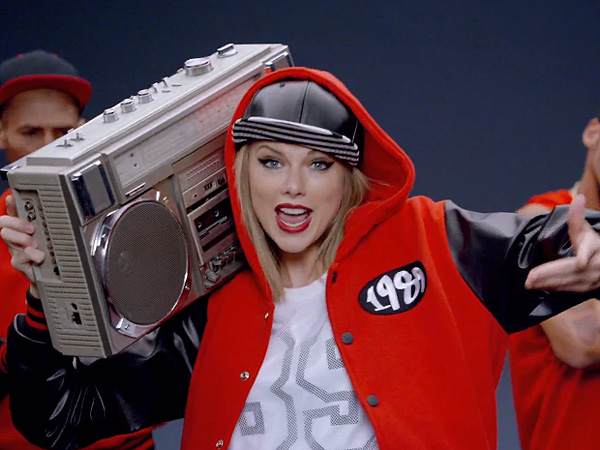
"Shake It Off" by Taylor Swift
This pop video is an interesting spin on Propps' character tropes. Taylor Swift represents the princess who needs saving (from the haters) and she also represents the hero, as she saves herself by learning to ignore the hate and block them out. These so-called "haters" are the villain. In terms of Todorov's theory, Taylor tries to dance ballet (equilibrium), realises she's bad at it (disruption), accepts that she can't dance ballet (recognition), tries some new and different forms of dance instead (attempt to resolve), and eventually embraces her lack of dancing talent (new equilibrium).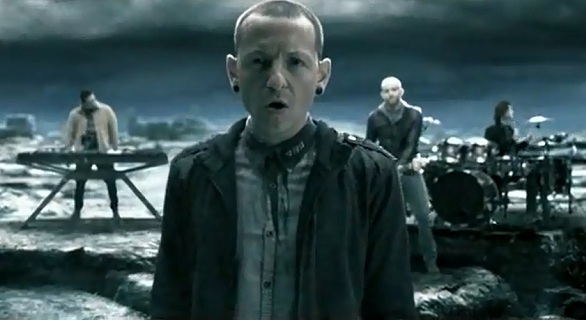 "Castle of Glass" by Linkin Park
This emotional video fits in with Todorov's narrative theory. There is an innocent child sitting at home (equilibrium), when there's a knock at the door and he's told his father has been killed in action (disruption), he breaks into tears (recognition), tries to cope (attempt to repair), his world comes crumbling down, his dad's friends rally around the boy to help him deal with the loss (acceptance), and he joins the military to follow in his dad's footsteps (new equilibrium), and tells another kid his father is dead, bringing the story full circle. Some of the characters fit Propps' tropes, such as the boy as the princess and later the hero, war as the villain, and the father as the sacrificial friend as well as the father figure and the hero (his death prompting the boy to take on the hero role) With regards to mise en scene, the setting of the brightly lit house that feels safe contrasts with the dark setting of war.
 "Monster" by Kanye West feat. Rick Ross, Jay-Z, Nicki Minaj and Bon Iver
This disturbing rap video contains themes of the black rights movement, apartheid and segregation, as it seems that in the video, black people are superior to and more powerful than white people, going so far as to "lynch" them in the same manner black people were in the fifties, clearly displaying Kanye's anger towards segregation in America. However, the theme I inferred was less 'the black race inflicting violence on the white race,' and more 'men inflicting violence on women,' which was not how it was intended and feeds into Roland Barthes' Death of the Author theory. Todorov's narrative theory doesn't apply here - there's no equilibrium, it's all disruption!
"Weapon of Choice" by Fatboy Slim
Though it simply features Christopher Walken dancing (and later flying, Matrix-style) around a hotel, the video for "Weapon of Choice" fits neatly into Todorov's theory. It begins with Walken sitting on a chair peacefully outside (equilibrium), then the music begins and interrupts his tranquillity (disruption), he hears the music and jams to it (recognition), he starts dancing to the music (attempt to repair), and when the song is over, he goes back to his chair and sits down (equilibrium returns).
Wednesday, 7 October 2015
Email requesting permission to use song
I sent an email over to Georgia Smith, studio manager and go-to contact at Mike Spencer Productions who produced the album "Communion" which "Shine" is listed on. I am currently awaiting a response.


Subscribe to:
Posts (Atom)